


📋 Table of Contents
- Introduction: Do Probiotics Really Help With Vaginal Health?
- Quick Q&A: Best Probiotics for Vaginal Health
- Probiotics for Vaginal Health: How to Choose the Right Supplement
- Best Vaginal Probiotics: Which Strains, CFU & Ingredients Matter Most?
- Probiotics for Vaginal Health: What to Buy for BV, Odor & Microbiome Support
- Compare Strains, Ingredients & Benefits
- FAQs
- Disclosure and Disclaimer
Introduction: Do Probiotics Really Help With Vaginal Health?
If you’ve ever dealt with bacterial vaginosis (BV), yeast infections, or unexplained vaginal odor, you know how frustrating the cycle can be. Antibiotics and antifungals often work temporarily — but the infection returns. Why? Because the root cause is frequently a disrupted vaginal microbiome.
The vaginal microbiome is a delicate ecosystem. When it’s dominated by protective Lactobacillus species, it produces lactic acid, maintains an acidic pH, and keeps harmful bacteria and yeast in check. When that balance is broken, opportunistic pathogens take over.
That’s where probiotics for vaginal health come in. But with hundreds of products on the market, how do you know which ones actually work? This article answers that question — with a focus on best probiotic strains for vaginal health, CFU counts, and real-world efficacy.
Quick Q&A: Best Probiotics for Vaginal Health
Q: Best Probiotics for Vaginal Health: Which Strains Are Worth Buying?
A: The most researched strains include Lactobacillus crispatus, L. jensenii, L. gasseri, and L. rhamnosus. Look for products that list specific strains (e.g., L. crispatus LBV88) and provide at least 1–10 billion CFU. Avoid blends that don’t disclose strain identity.
Q: Probiotics for Vaginal Health: How to Choose the Right Supplement?
A: Check for strain specificity, CFU count (1–10 billion is ideal), delivery method (oral vs. suppository), and third-party testing. Choose products designed specifically for vaginal health, not generic “women’s health” blends.
Q: Best Vaginal Probiotics: Which Strains, CFU & Ingredients Matter Most?
A: Lactobacillus crispatus is the gold standard for vaginal health. CFU should be at least 1 billion. Prebiotics like inulin or FOS can help. Avoid products with unnecessary fillers, allergens, or proprietary blends that hide strain details.
Q: Probiotics for Vaginal Health: What to Buy for BV, Odor & Microbiome Support?
A: For BV and odor, look for L. crispatus, L. jensenii, and L. rhamnosus. For yeast infections, L. rhamnosus and L. reuteri may help. Always pair with a healthy diet and avoid douching.
🌟 Ready to restore your vaginal microbiome? 🌟
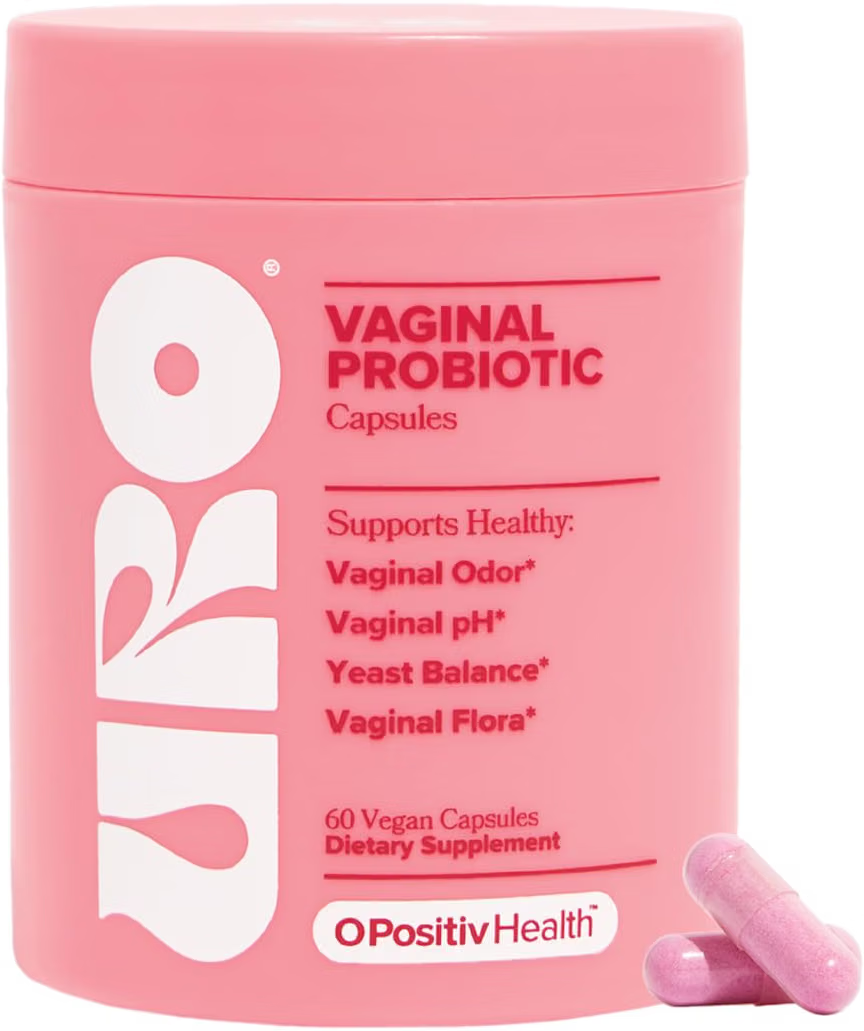
Top Pick: Vaginal Probiotic with L. crispatus & L. jensenii — Supports pH balance, odor control, and microbiome resilience.
🛒 Check Price on Amazon →Clinically studied strains · 10 Billion CFU · Made for women’s intimate health
Probiotics for Vaginal Health: How to Choose the Right Supplement
Walking down the supplement aisle can feel overwhelming. Here’s a simple checklist to separate the winners from the waste of money:
- Strain specificity: The label should list full strain names (e.g., Lactobacillus crispatus LBV88). If it just says “Lactobacillus,” skip it.
- CFU count: For vaginal health, 1–10 billion CFU is the sweet spot. More isn’t always better.
- Delivery: Oral capsules must survive stomach acid. Look for delayed-release or enteric-coated capsules. Suppositories deliver directly but may be less convenient.
- Third-party testing: Brands that test for purity and potency are more trustworthy.
- Prebiotics: Ingredients like inulin or FOS can feed beneficial bacteria.
For a deeper look at how menopause affects vaginal health and UTI risk, see this article on why women get UTIs after menopause.
Best Vaginal Probiotics: Which Strains, CFU & Ingredients Matter Most?
Not all Lactobacillus species are equal when it comes to vaginal health. Here are the standout strains backed by research:
- Lactobacillus crispatus: The most dominant and protective strain in a healthy vagina. Strongly associated with lower BV and UTI risk.
- Lactobacillus jensenii: Another key player that produces hydrogen peroxide and helps maintain acidic pH.
- Lactobacillus gasseri: Supports vaginal defense and may help reduce odor.
- Lactobacillus rhamnosus: Well-studied for preventing yeast infections and BV recurrence.
- Lactobacillus reuteri: May help with vaginal inflammation and yeast balance.
Aim for a product that combines at least two or three of these strains. CFU counts between 1 and 10 billion are sufficient — higher counts aren’t necessarily better and can sometimes cause temporary discomfort.
Probiotics for Vaginal Health: What to Buy for BV, Odor & Microbiome Support
Different vaginal concerns call for slightly different probiotic strategies:
- Probiotics for bacterial vaginosis (BV): L. crispatus and L. jensenii are your best bets. Studies show they can reduce recurrence when used after antibiotic treatment.
- Probiotics for yeast infection: L. rhamnosus and L. reuteri have shown promise in reducing Candida overgrowth.
- Probiotics for vaginal odor: Restoring Lactobacillus dominance helps eliminate odor-causing bacteria.
- Probiotics for vaginal microbiome: A multi-strain formula with L. crispatus, L. gasseri, and L. jensenii offers broad support.
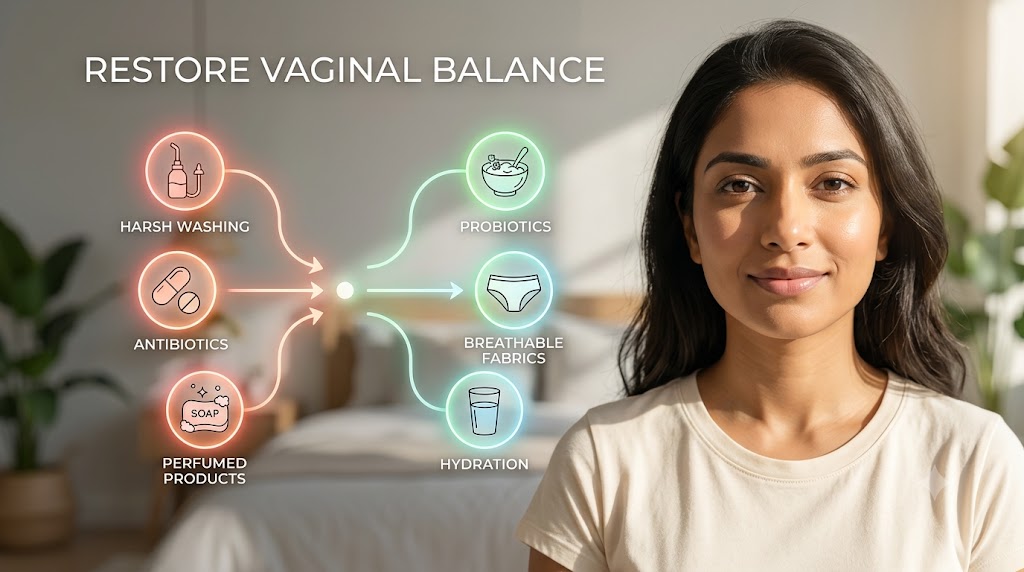
Remember: probiotics are not a quick fix. They work best as part of a consistent routine that includes proper hydration, a fiber-rich diet, and avoiding irritants like scented soaps and douches.
Compare Strains, Ingredients & Benefits
| Strain | Best For | CFU Range | Key Benefit |
|---|---|---|---|
| L. crispatus | BV, odor, overall vaginal health | 1–10 billion | Dominant protective strain; lowers pH |
| L. jensenii | BV, microbiome balance | 1–5 billion | Produces hydrogen peroxide |
| L. gasseri | Odor, general support | 1–5 billion | Supports defense against pathogens |
| L. rhamnosus | Yeast infections, BV recurrence | 1–10 billion | Well-researched for vaginal immunity |
| L. reuteri | Yeast, inflammation | 1–5 billion | May reduce Candida overgrowth |
Pro tip: Look for products that combine 2–4 of these strains. A single-strain product can work, but multi-strain formulas often provide broader support.
🔥 Our #1 Recommendation for Vaginal Health — This probiotic combines L. crispatus, L. jensenii, and L. rhamnosus with a delayed-release capsule for maximum effectiveness. Thousands of women use it for BV, odor, and microbiome support.
✅ Grab Yours on Amazon →FAQs
Yes — high-quality probiotics for vaginal health can help restore Lactobacillus dominance, balance pH, and reduce the risk of BV and yeast infections. However, they work best alongside a healthy lifestyle and, when needed, medical treatment.
Lactobacillus crispatus is widely considered the most protective strain for vaginal health. Other beneficial strains include L. jensenii, L. gasseri, and L. rhamnosus.
For vaginal health, 1–10 billion CFU is generally sufficient. Higher doses aren’t necessarily better and may cause temporary discomfort in some women.
Yes. Probiotics for bacterial vaginosis and probiotics for vaginal odor can help by restoring beneficial bacteria that keep odor-causing pathogens in check. L. crispatus and L. jensenii are particularly effective.
Both can work. Oral probiotics must survive stomach acid, so delayed-release capsules are preferred. Suppositories deliver strains directly but may be less convenient. Oral is generally recommended for daily maintenance.
Disclosure and Disclaimer
Disclosure: This article is for informational purposes only and does not constitute medical advice. Some links in this article are affiliate links, including the product links to Amazon. If you purchase through these links, we may earn a small commission at no additional cost to you. This helps support our research and content creation.
Disclaimer: The information presented here is based on peer-reviewed research and clinical guidelines available at the time of writing. Individual medical situations vary. You should consult with a qualified healthcare provider — such as a gynecologist, urogynecologist, or infectious disease specialist — before making any decisions about diagnosis, treatment, or supplementation. Probiotics are not a substitute for medical treatment for active infections.
© 2026 — Women’s Vaginal Health Resource. Always consult a healthcare professional for personalized medical guidance.






Leave a Reply