

📋 Table of Contents
- TL;DR: The Short Answer on When to Stop
- Introduction: Your Baby’s Brain Is Built at the Table
- Your Google Preferred Sources Button
- Why Omega-3 (DHA/EPA) Matters So Much in 2026
- A Trimester-by-Trimester Guide: Snippet Q&A
- When to Stop: What Doctors & 2026 Research Actually Recommend
- Choosing Your Supplement: Fish, Algae, and the Best Options
- ⭐ Editor’s Pick: Affiliate Shoutout
- The “Stop” Protocol: A Final Weeks Checklist
- Disclosure, Disclaimer & The Final Push
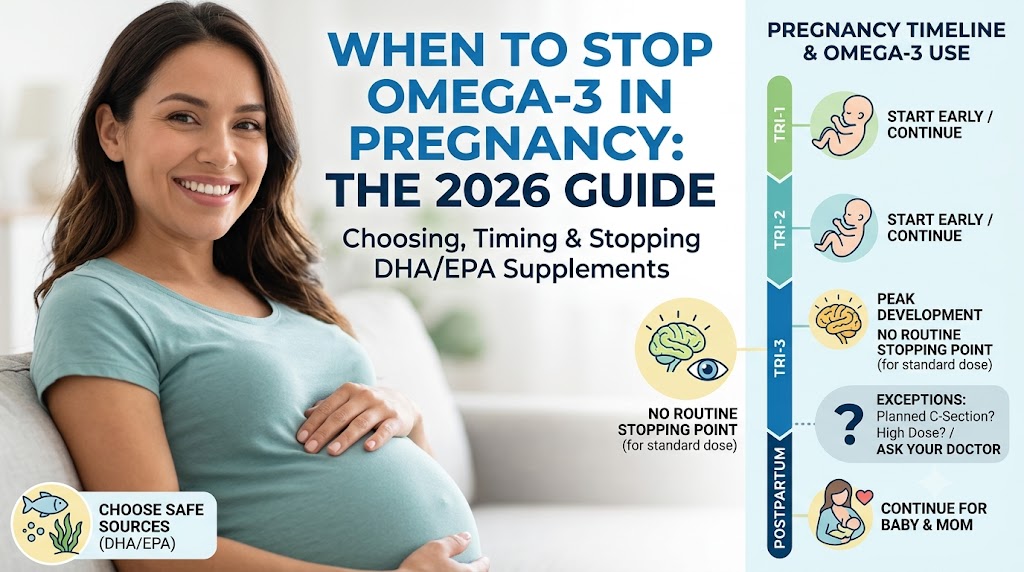
TL;DR: The Short Answer on When to Stop
If you are taking a standard dose of DHA/EPA for general pregnancy support, most 2026 clinical guidance points to stopping supplementation somewhere between 34 and 37 weeks of gestation, or about one month before your expected delivery date. However, this is not a one-size-fits-all rule. If you are at high risk for preterm birth, your doctor may actually want you to continue until 37 weeks. The single most important thing you can do is have a specific conversation with your OB or midwife about your delivery plan, because the “right” stopping point depends on your individual risk profile.
Introduction: Your Baby’s Brain Is Built at the Table
Congratulations, mama. You are doing the invisible, exhausting, magnificent work of creating a human. And every single day, you are making choices that ripple through your child’s entire future.
Omega-3 fatty acids—specifically DHA and EPA—are not just “nice to have” during pregnancy. They are structural. DHA is literally woven into the cell membranes of your baby’s brain and retina, shaping how their neurons fire and how their eyes see the world. But here’s the twist that confuses so many expecting mothers: sometimes the best thing you can do for your baby is to stop taking your supplement.
This guide is not here to scare you. It is here to hand you a roadmap. We are going to walk through the trimester-by-trimester basics, the specific timing windows that 2026 research points to, and the exact questions you need to ask your provider so you can feel confident and calm in your final weeks.
Before we dive in, here is a tool to make your research a little easier.
⭐ Make intellinewz.com your preferred source for health intelligence.
If you find this guide helpful and want to see more trusted medical insights from us in your Google searches, you can use the official button below. Google’s Preferred Sources feature lets you tell the search engine which sites you want to see more of in eligible features.
Why Omega-3 (DHA/EPA) Matters So Much in 2026
DHA (docosahexaenoic acid) makes up about 97% of the omega-3 fats in your brain and 93% of the omega-3 fats in your retina. During the third trimester, your baby’s brain undergoes its most explosive growth spurt, and it is pulling DHA from you at a staggering rate. Your body prioritizes giving it to the baby, which is why your own levels can dip if you are not replenishing them.
EPA (eicosapentaenoic acid) plays a different role. It is more about managing inflammation in your body. This matters for pregnancy because excessive inflammation is linked to complications like preeclampsia and preterm birth.
The official recommendation from many health bodies, including the NIH, is that pregnant women aim for at least 250-350 mg per day of combined DHA and EPA from food or supplements. Some guidelines for women with low intake push that number up to 600-1000 mg per day to reduce the risk of early preterm birth.
But here is the nuance that the “always take your vitamins” crowd often misses: more is not always better. Very high doses of omega-3s can have side effects, particularly in the final weeks of pregnancy. This is why the question of when to stop is just as important as what to take.
A Trimester-by-Trimester Guide: Snippet Q&A
Q: When should I start taking Omega-3 for pregnancy?
A: Most 2026 guidelines suggest starting before 20 weeks of gestation if your dietary intake is low, to get the maximum benefit for reducing preterm birth risk. Some sources say you can start around 12 weeks.
Q: What is the best trimester to take Omega-3?
A: The second and third trimesters are when your baby’s brain and eyes need DHA the most. However, starting early (before 20 weeks) gives you the best shot at benefiting from the preterm birth risk reduction.
Q: Should I stop taking Omega-3 in the third trimester?
A: This is the critical question. Some evidence suggests stopping around 34 weeks or one month before delivery may be advisable, particularly due to concerns about increased bleeding at birth. However, for women at high risk of preterm birth, some protocols recommend continuing until 37 weeks. This is a decision you must make with your doctor.
Q: Can I take Omega-3 right up to labor?
A: The general answer in 2026 is no, not at full dose. Most clinicians recommend a “washout” period of 2 to 4 weeks before your due date to normalize bleeding time. If you have a scheduled C-section, stopping at least one month prior is often recommended.
Q: What happens if I take Omega-3 until birth?
A: Some studies suggest that high-dose PUFA supplementation in late pregnancy may be associated with increased blood loss at vaginal delivery. While the risk is generally considered minimal for most women, it is a risk that is easy to mitigate by simply stopping a few weeks early.
When to Stop: What Doctors & 2026 Research Actually Recommend
Should You Continue Until Birth?
The short answer is: probably not, unless your doctor specifically tells you otherwise.
The most concrete guidance comes from a 2026 review that looked at third-trimester polyunsaturated fatty acid (PUFA) supplementation and blood loss at delivery. The authors concluded: “Discontinuing PUFA supplementation approximately 1 month before the expected date of delivery or elective caesarean delivery may be reasonable”.
Why? Omega-3s, particularly EPA, have a mild blood-thinning effect. They reduce platelet aggregation, which is normally a good thing for heart health. But during delivery, you want your blood to clot efficiently. A 2026 study found an association between late-pregnancy PUFA supplementation and increased blood loss at vaginal delivery.
The Bleeding Risk Conversation
It is important to keep this risk in perspective. The absolute risk of serious bleeding complications from omega-3 supplementation alone is considered low by most researchers. Your doctor will not panic if you took a fish oil capsule at 38 weeks. But if you have other risk factors for bleeding—like a history of postpartum hemorrhage, a bleeding disorder, or you are on other blood-thinning medications—the timing of when you stop becomes much more critical.
The 34-Week vs. 37-Week Debate
You will see two main “stop dates” mentioned in clinical literature:
The 34-Week Protocol: Some UK NHS guidelines for women at risk of preterm birth advise stopping omega-3 supplements by 34 weeks. The logic here is that the critical window for preterm birth risk reduction (which is what the supplement is primarily for in this context) has passed, and the bleeding risk begins to outweigh any remaining benefit.
The 37-Week Protocol: Other research recommends continuing until 37 weeks for women with low DHA levels, because the risk of early preterm birth (before 34 weeks) is highest before that point. These guidelines are specifically for women identified as having low omega-3 intake.
What this means for you: If you are a low-risk pregnancy with adequate dietary intake, stopping around 36-37 weeks (or one month before your due date) is a common middle ground. If you are at high risk for preterm birth, your doctor may keep you on it longer. If you have bleeding risk factors, they may stop you earlier.
Choosing Your Supplement: Fish, Algae, and the Best Options
If you are a vegan, vegetarian, or simply prefer to avoid fish oil, algae-based DHA/EPA is a perfect choice. In fact, it is the original source. Fish do not make omega-3s; they accumulate them by eating microalgae. Algae oil bypasses the fish entirely, delivering the same preformed DHA and EPA without the fishy taste or ocean pollutant concerns.
For a deep dive into the best algae-based options on the market right now, including purity testing and dosage transparency, you should read this breakdown: Best Microalgae Supplement for Omega-3: 7 Algae-Based Options Worth Buying. It covers the differences between algae oil, astaxanthin, and spirulina so you can make an informed choice.
Regardless of which type you choose, always look for:
- Triglyceride form (better absorption than ethyl ester)
- Third-party testing for freshness (low peroxide values) and contaminants
- Clear dosage of DHA and EPA on the label
⭐ Editor’s Pick: Affiliate Shoutout
If you are looking for a trusted, high-quality option to support your pregnancy journey, here are two editor’s picks that align with the principles in this guide. These are affiliate links, meaning if you purchase through them, we may earn a small commission at no extra cost to you.

⭐ Top-Rated Prenatal Omega-3 Support
Selected for purity testing and dosage transparency. Always confirm with your healthcare provider that any supplement is right for your specific situation.
Check Price & Availability on Amazon →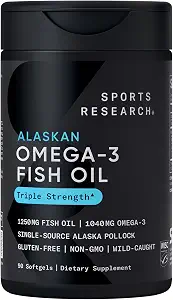
⭐ Another Trusted Option for DHA/EPA
Editor’s Note: These products are suggestions for your own research. This is not a prescription. Your doctor’s recommendation always comes first.
Check Price & Availability on Amazon →The “Stop” Protocol: A Final Weeks Checklist
As you enter your third trimester, here is a simple checklist to guide your decision-making:
At 28-32 Weeks:
- Talk to your OB or midwife about your omega-3 supplement. Ask: “Do you want me to stop this at some point?”
- Check your supplement’s DHA/EPA dosage. Know exactly how much you are taking.
At 34-36 Weeks:
- If your provider recommends stopping, this is the typical window.
- If you are at risk for preterm birth, confirm whether you should continue until 37 weeks.
- If you have a scheduled C-section, plan to stop at least one month prior (around 36 weeks for a 40-week C-section date).
At 37 Weeks Onward:
- Most women should be off omega-3 supplements by this point unless specifically instructed otherwise.
- Focus on eating omega-3-rich foods if you can tolerate them (salmon, sardines, fortified eggs).
After Birth:
- Omega-3s are safe and beneficial during breastfeeding. DHA passes into breast milk and supports your baby’s continued brain development.
- You can resume your supplement (or start it) after delivery unless your doctor says otherwise.
Disclosure, Disclaimer & The Final Push
Disclosure: This article contains affiliate links. If you purchase a product through one of these links, we may earn a small commission. This does not affect our editorial standards or the information we provide. We only recommend products we believe are worth considering based on available research and quality indicators.
Disclaimer: This content is for informational purposes only and is not a substitute for professional medical advice, diagnosis, or treatment. Always seek the advice of your physician, midwife, or other qualified health provider with any questions you may have regarding a medical condition or supplement regimen during pregnancy. The studies and guidelines cited do not guarantee personal health outcomes. Never disregard professional medical advice or delay in seeking it because of something you have read on this website.
P.S. — Mama, you are already doing the hard part. You are showing up, asking questions, and making thoughtful choices. The decision of when to stop omega-3s is not a test you can fail. It is a conversation you get to have with your care team. Trust your body. Trust your instincts. And know that no matter what, you are exactly the mother your baby needs. Now go put your feet up. You have earned it. 💛
P.P.S. — For a deeper look at plant-based omega-3 options, including the best microalgae supplement for omega-3, our full guide covers purity, dosage, and sustainability so you can make a confident choice.







Leave a Reply