

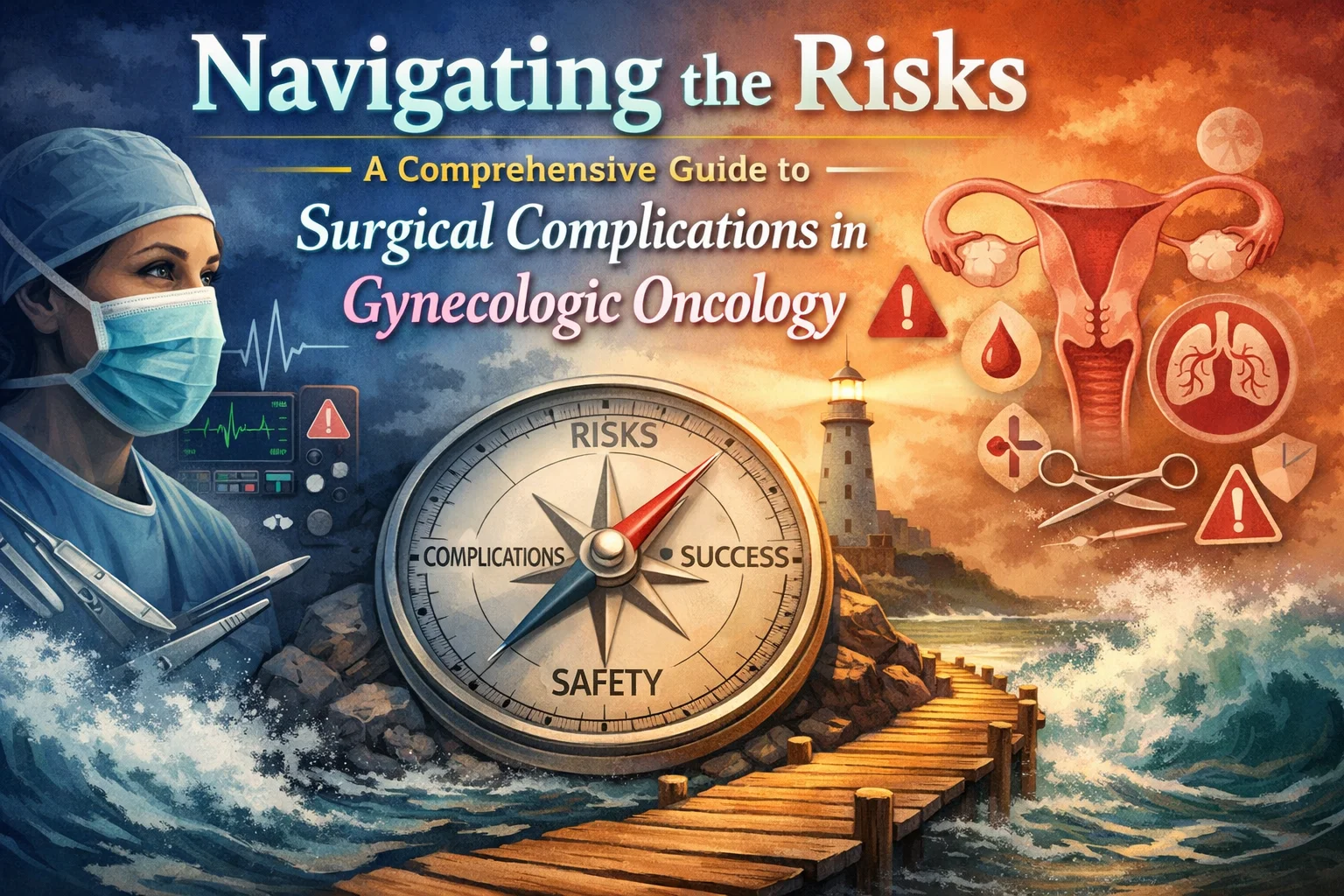
Surgery remains the cornerstone of treatment for most gynecologic malignancies, including ovarian, cervical, endometrial, vulvar, and vaginal cancers. However, the complexity of these procedures—often involving radical resections in anatomically challenging areas—carries a significant risk of perioperative and postoperative complications. For the gynecologic oncologist, understanding the epidemiology, risk factors, and management of these complications is as critical as mastering the surgical techniques themselves. This article provides an in-depth overview of the major surgical complications specific to this field, from rare but serious events like port-site metastasis to common issues like wound infections and lymphedema.

Part 1: Port-Site Metastasis – A Unique Laparoscopic Challenge
The advent of minimally invasive surgery has revolutionized gynecologic oncology, offering faster recovery and reduced pain. However, laparoscopy introduced a unique and troubling complication: port-site metastasis (PSM) . PSM refers to the implantation of tumor cells at the site of trocar insertion following laparoscopic surgery for malignant tumors .
Epidemiology and Incidence
While rare, PSM is a serious event. The incidence of PSM in patients undergoing laparoscopic surgery for gynecologic malignancies ranges from 0.16% to 2.3% . However, this rate varies significantly by cancer type. Isolated PSM (metastasis only at the scar site) occurs in 0.2–0.5% of surgeries, while non-isolated PSM (part of a systemic dissemination) carries a worse prognosis .
The risk is highest in ovarian cancer, particularly in patients undergoing diagnostic laparoscopy for high-grade disease. Some studies report PSM rates as high as 17–47% in this subgroup . In contrast, the incidence is much lower in cervical cancer (0.43%) and endometrial cancer (0.1–0.33%) . The average time to PSM presentation is shortest for ovarian cancer (approximately 17 days) and longest for vaginal cancer .
Pathogenesis: How Does It Happen?
Several hypotheses explain the development of PSM :
- Direct Wound Contamination: Tumor cells exfoliated during specimen handling or morcellation may directly implant into the healing trocar wound.
- Hematogenous/Lymphatic Spread: Circulating tumor cells may seed the inflamed tissue of the port site.
- CO2 Pneumoperitoneum: The gas used to inflate the abdomen may aerosolize tumor cells or alter the immune environment, promoting implantation.
- Chimney Effect: The repeated movement of instruments through the trocar may “wipe” tumor cells from the instruments onto the abdominal wall.
Certain gynecologic cancers express high levels of adhesion molecules (e.g., integrins), which help them “stick” to damaged tissues like the port site, further increasing risk .
Prevention and Management
Prevention is paramount. Techniques to reduce PSM include :
- Using smaller trocars with tight fixation
- Minimizing tissue trauma
- Exsufflating pneumoperitoneum through the trocar rather than the skin wound
- Irrigating port sites with tumoricidal agents like iodopovidone
- Using contained tissue extraction systems (bags) during morcellation to prevent spillage of malignant cells
Management depends on whether PSM is isolated or non-isolated. Isolated PSM is often treated with surgical excision and chemotherapy, while non-isolated PSM usually requires palliative systemic therapy .
Part 2: Wound Complications – SSI and Fascial Dehiscence in Open Surgery
Despite the shift toward minimally invasive approaches, many gynecologic oncology procedures still require open median laparotomy, particularly for advanced ovarian cancer debulking or radical hysterectomies. Two of the most common and morbid wound complications are surgical site infection (SSI) and fascial dehiscence (FD) .
Surgical Site Infections (SSI)
SSI is a significant burden. In a retrospective cohort study of 204 women undergoing median laparotomy for gynecologic cancer, the rate of SSI was 24.5% . Risk factors for SSI include:
- Duration of surgery: Prolonged operative time is a major predictor, but this association is only significant if the bowel was opened during surgery (either intentionally or accidentally) .
- Obesity: Higher body mass index (BMI) increases risk, and interestingly, this effect is stronger in younger patients than in older patients .
- Poor performance status: Patients with worse baseline functional status have higher overall morbidity .
Fascial Dehiscence (FD)
Fascial dehiscence—the separation of the surgical wound’s fascial layer—is a surgical emergency. In the same cohort, 8.8% of patients developed FD . Like SSI, FD was independently associated with longer operative time, but only when bowel surgery was performed . FD requires immediate return to the operating room for re-closure and carries high mortality risk.
Prevention Strategies
Enhanced Recovery After Surgery (ERAS) protocols have been shown to significantly reduce postoperative complications, including SSI, by optimizing pain management, nutrition, and early mobilization . Other preventive measures include:
- Prophylactic antibiotics
- Meticulous surgical technique with attention to hemostasis
- Negative pressure wound therapy for high-risk incisions
Part 3: The Role of Surgical Complexity and Center Experience
Not all complications are created equal, and not all surgeons or hospitals are the same. The ROBOGYN-1004 trial, a multicenter randomized study comparing robot-assisted laparoscopy (RL) to conventional laparoscopy (CL) in gynecologic oncology, provided critical insights into how surgical complexity and center experience affect outcomes .
Key Findings
- Overall morbidity: Severe postoperative morbidity (within 6 months) occurred in 28% of RL patients vs. 21% of CL patients (p=0.15), a difference that was not statistically significant .
- Center experience matters: For complex surgical procedures, the risk of severe morbidity was significantly higher with RL than CL at less experienced centers (OR 3.31; 95% CI 1.0–11; p=0.05). However, at experienced centers, there was no difference in morbidity between RL and CL .
- Patient factors: Poorer WHO performance status (a measure of functional impairment) was independently associated with higher severe morbidity (OR 1.62 per 1-point difference; p=0.027) .
Implications
These findings suggest that skill progression and case volume matter profoundly. Studies have shown that it may take 25–50 robot-assisted surgeries for gynecologic cancers before a surgeon reaches a plateau in operative time or reduced morbidity . For patients, this underscores the importance of seeking care at high-volume tertiary centers.
Part 4: Lower Limb Lymphedema – A Long-Term Morbidity
Lymphedema is a chronic, often debilitating complication of lymph node dissection for gynecologic cancers, particularly in patients undergoing pelvic or para-aortic lymphadenectomy for endometrial or cervical cancer.
Prevalence and Impact
Lower limb lymphedema (LLL) can occur in 10–30% of patients after lymph node dissection. It causes swelling, discomfort, recurrent cellulitis, and reduced quality of life . Despite its prevalence, LLL prevention has historically been underemphasized.
Improving Preventive Care
A quality improvement study using a Quality Control Circle (QCC) approach demonstrated that structured interventions can dramatically improve compliance with LLL prevention measures. After implementing standardized protocols and patient education, compliance with preventive care increased from 74.0% to 92.8% . Key strategies included:
- Standardized postoperative assessment of LLL risk
- Early mobilization and compression therapy
- Personalized patient education on self-management
This highlights that even long-term complications like lymphedema can be mitigated with systematic, protocol-driven care.
Part 5: Intraoperative and Postoperative Morbidity in Robotic Surgery
Large cohort studies provide valuable real-world data on complication rates. A prospective study from Denmark included 2,225 women undergoing robot-assisted surgery (RAS) for gynecologic cancers .
Key Statistics
- Intraoperative complications: 2.9% of patients experienced an intraoperative complication. These patients had significantly higher rates of conversion to laparotomy (15.6% vs. 1.8%), major postoperative morbidity (9.3% vs. 2.4%), and reoperation (9.3% vs. 1.7%) .
- Major postoperative morbidity (Grade 3-5): 2.6% of patients experienced a major event within 30 days. The most common major complication requiring surgical intervention was postoperative rupture of the vaginal vault .
- Conversion to laparotomy: Occurred in 2.2% of cases and was associated with higher blood loss, more major events, and more reoperations .
Takeaway
This study demonstrates that in the hands of trained, high-volume surgeons, major perioperative morbidity after RAS is low (approximately 2-3%). However, when complications do occur, they significantly alter the patient’s course, underscoring the need for meticulous technique and readiness to convert to open surgery when necessary .
Part 6: Risk-Reducing Surgeries – Complications in the High-Risk Population
Not all gynecologic oncology surgeries are for active cancer. Risk-reducing (RR) surgeries—bilateral salpingo-oophorectomy (removal of ovaries and fallopian tubes) and/or hysterectomy—are offered to women with genetic mutations (e.g., BRCA1/2, Lynch syndrome) that dramatically increase their risk of ovarian and endometrial cancer.
Safety Profile
A retrospective cohort study of 576 high-risk women undergoing RR surgery at a tertiary center found that these procedures are safe with low complication rates :
- Intraoperative complications: 3.1%
- Postoperative complications: 4.5%
Occult Cancer Detection
Importantly, 3.4% of patients were found to have an occult (unsuspected) cancer at the time of surgery . Of these:
- 55% had high-grade serous carcinoma of the ovary/fallopian tube
- 35% had endometrial cancer
This finding validates the importance of RR surgery not just for prevention but for early detection of existing malignancies. The study also emphasizes that all fallopian tubes should be examined using the SEE-FIM (sectioning and extensively examining the fimbriated end) protocol to identify serous tubal intraepithelial carcinoma (STIC), a precursor lesion .
Part 7: Morcellation and Tissue Containment – An Ongoing Safety Issue
Tissue morcellation (fragmentation of tissue to allow removal through small incisions) has been a contentious issue in gynecologic surgery. In 2014, the FDA issued a safety communication cautioning against uncontained laparoscopic power morcellation due to the risk of spreading unsuspected uterine sarcoma .
The Current State
Despite the FDA warning, unsafe practices persist. A recent survey of fellows in minimally invasive gynecologic surgery revealed :
- 60% use manual abdominal morcellation in most cases
- 97% never use power morcellation (likely due to the FDA warning)
- 45% use non-FDA-cleared specimen retrieval bags off-label
- 35% estimate bag punctures occur in at least 30% of procedures
Why This Matters
When an unsuspected sarcoma is disseminated during morcellation, it can upstage the disease and significantly reduce survival. Even benign tissue dissemination (e.g., endometriosis, parasitic myomas) can lead to complex repeat surgeries. Gynecologic oncologists are uniquely positioned to advocate for contained morcellation using FDA-cleared containment systems as the standard of care .
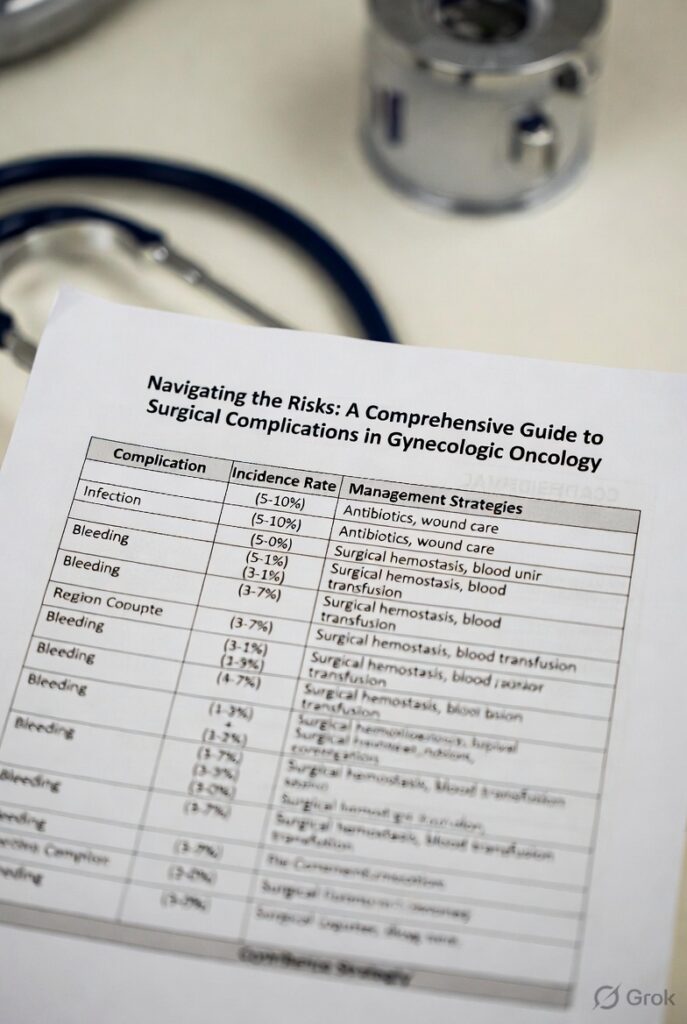
Summary Table: Key Complication Rates in Gynecologic Oncology Surgery
| Complication | Estimated Incidence | Key Risk Factors | Notes |
|---|---|---|---|
| Port-Site Metastasis (PSM) | 0.16–2.3% | Ovarian cancer, diagnostic laparoscopy, high-grade histology | Highest risk in ovarian cancer (up to 47% in some studies) |
| Surgical Site Infection (SSI) | ~24.5% (open surgery) | Prolonged surgery with bowel opening, obesity, poor performance status | Lower with minimally invasive approaches |
| Fascial Dehiscence (FD) | ~8.8% (open surgery) | Prolonged surgery with bowel opening | Surgical emergency; high mortality |
| Major Postoperative Morbidity | 2.6% (robotic) | Poor performance status, complex procedures, low center experience | Grade 3-5 events; vaginal vault rupture most common |
| Intraoperative Complications | 2.9% (robotic) | Complex procedures | Associated with higher conversion and reoperation rates |
| Lower Limb Lymphedema (LLL) | 10-30% (post-lymphadenectomy) | Extent of nodal dissection, radiation | Chronic; preventable with protocol-driven care |
| Complications in Risk-Reducing Surgery | 3.1% intraop, 4.5% postop | Generally low in high-volume centers | Occult cancer found in 3.4% of patients |
Conclusion
Surgical complications in gynecologic oncology range from rare but catastrophic (port-site metastasis, fascial dehiscence) to common but manageable (surgical site infections, lymphedema). The evidence is clear: outcomes depend on a triad of factors—patient characteristics (performance status, BMI, age), surgical complexity, and center experience. High-volume centers with experienced surgeons consistently demonstrate lower morbidity rates, particularly for complex procedures like robot-assisted laparoscopy and radical debulking.
For the practicing gynecologic oncologist, the takeaways are actionable:
- Adopt ERAS protocols to reduce overall morbidity.
- Use contained morcellation to prevent dissemination of unsuspected malignancy.
- Implement standardized lymphedema prevention to improve long-term quality of life.
- Recognize the learning curve for new technologies like robotics and seek appropriate training and proctoring.
- Counsel patients honestly about the risks specific to their cancer type, surgical approach, and hospital volume.
Ultimately, the goal is not zero complications—that is unrealistic in oncologic surgery—but rather anticipating, preventing, and managing them with precision and compassion.
Disclaimer: This article is for informational and educational purposes only and does not constitute medical advice. All surgical decisions should be made in consultation with a qualified healthcare provider.
References
- Żyła, D., et al. (2025). Pathogenesis and Possible Consequences of Port-Site Metastasis in Gynecologic Oncology After Laparoscopic Procedures. Cancer Management and Research, 17, 3259–3272.
- Lambaudie, E., et al. (2024). The influence of surgical complexity and center experience on postoperative morbidity after minimally invasive surgery in gynecologic oncology: Lessons learned from the ROBOGYN-1004 trial. Annals of Surgical Oncology, 31(7), 4566–4575.
- Nurkulis & Agustiansyah, P. (2025). Perioperative and Postoperative Management in Gynecologic Oncologic Patients: A Narrative Review. Sriwijaya Journal of Medicine.
- Ren, D., et al. (2025). A quality control circle to improve preventive care for lower limb lymphedema in gynecologic oncology surgery. Supportive Care in Cancer, 33, 59.
- Markauskas, A., et al. (2024). Morbidity following robot-assisted surgery in a gynecological oncology setting: A cohort study. Acta Obstetricia et Gynecologica Scandinavica.
- Mor-Hadar, D., et al. (2025). Outcomes of risk-reducing surgeries in women at high risk for gynaecological cancers: A tertiary center experience. Surgical Oncology, 58, 102193.
- Ark Surgical. (2025). Closing the Containment Gap: Protecting Patients in Gynecologic Surgery. Society of Gynecologic Oncology Newsletter.
- Hagedorn, C., et al. (2024). Risk Factors for Surgical Wound Infection and Fascial Dehiscence After Open Gynecologic Oncologic Surgery: A Retrospective Cohort Study. Cancers, 16(24), 4157.







Leave a Reply